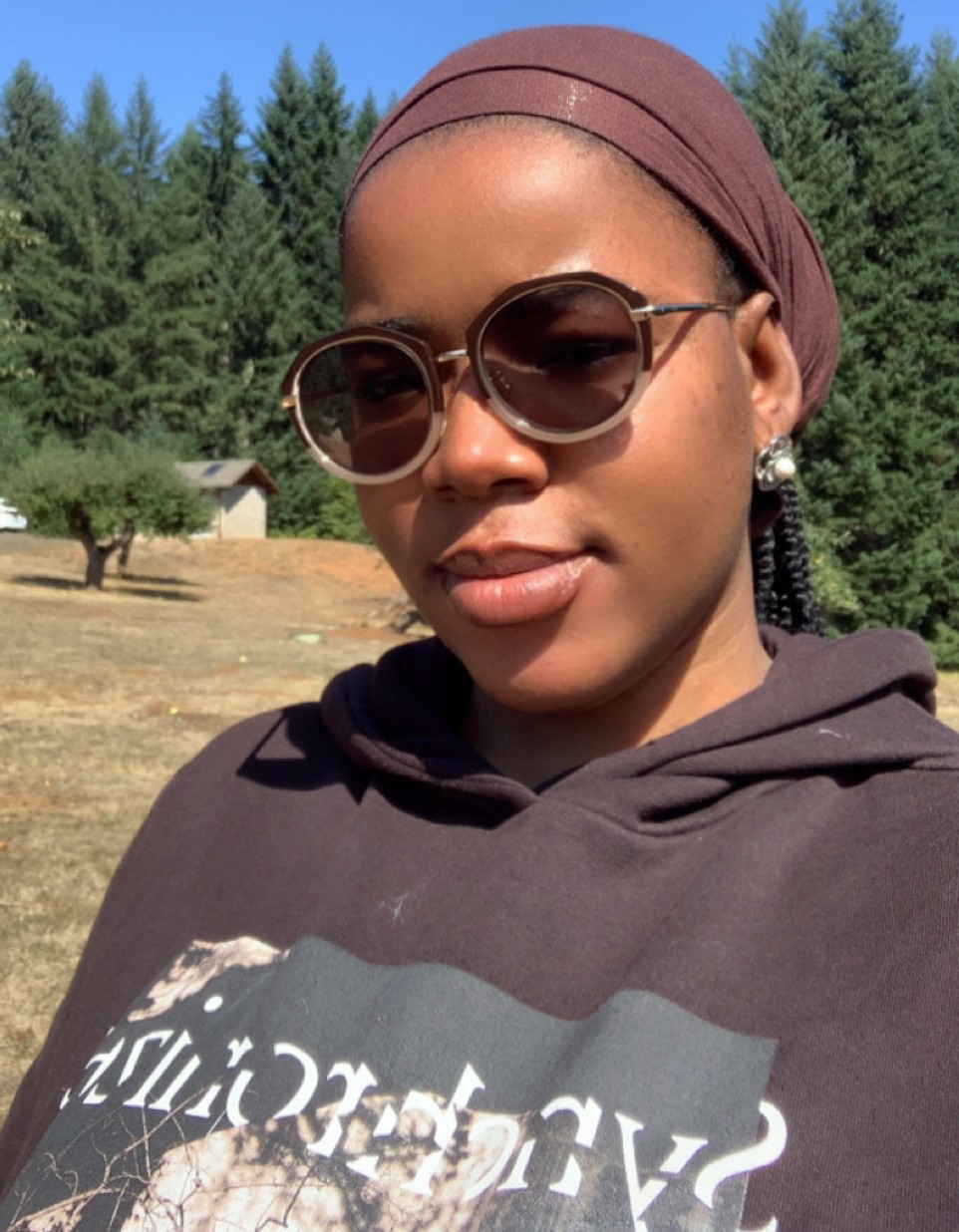
Kausar Moshood
Master's/PhD Student, Oregon State University
Email: moshoodk[at]oregonstate[dot]edu
Kausar

I'm a Master's/PhD student in Computer Science at Oregon State University, part of the Advanced Software Engineering Research (ANSWER) Lab and the High-Performance Computing and Systems Group (HiPCastor). I work in automated software engineering and testing, applying fuzzing, delta debugging and verification techniques to localize faults in complex systems.

Alongside that, I work on speech and language technology for low-resource African languages with LyngualLabs, covering Yoruba TTS accessibility, ASR for code-switched speech and multilingual speech recognition.

I hold a bachelor's degree in Computer Engineering from Oduduwa University, where I graduated with first-class honors as the university's top overall student. Outside research, I lead the AWS Student Builder Group at Oregon State University as its first Student Lead, and I coordinate community tech events (I was previously a GDG on Campus Lead and have spoken at 50+ RAIN-INNetwork events across Nigeria), and I recently won 1st place in the Social Impact track at BeaverHacks 2026 with SpeakAbroad, a conversation-practice platform for international students.

Selected Publications

Software testing and speech/language technology for low-resource settings. Full list →

Testing · HPC code translation
Oscar Ludwig, Ninad Anklesaria, Zheming Jin, Swaroop Pophale, Kausar Moshood, Christian J. DeVore, Brandon Gill, Cassius Villareal, Keita Teranishi, Manish Motwani
arXiv preprint, 2026
what it does
LLMs are increasingly used to port scientific code across HPC programming models (CUDA to OpenMP, OpenACC, Kokkos, SYCL), but compilation success and token similarity can't confirm the translation is actually correct. Kaizen uses metamorphic fuzzing and differential testing to catch behavioral divergences that static benchmarks miss.
Speech · edge ASR
Victor Tolulope Olufemi, Oreoluwa Babatunde, Ramsey Njema, Bolarinwa Gbotemi, Wanchi Lucia Yen, John Uzodinma, Sunday Ajayi, Oluwademilade Williams, Kausar Moshood, et al.
arXiv preprint, 2026
what it does
Tests whether compact, domain-specialized ASR models can beat massively multilingual foundation models on conversational African speech across 19 languages. Finetuned edge models cut macro-averaged WER from 64.9% to 38.0% versus the best zero-shot baseline, using models 3–40× smaller.
Accessibility · TTS
Kausar Moshood, Victor Olufemi, Oreoluwa Babatunde, Emmanuel Bolarinwa, Williams Oluwademilade
AfricaNLP 2026 (7th Workshop on African NLP), pp. 228–234
what it does
Tests whether current Yoruba TTS systems can deliver standardized exam content to visually impaired students. Five blind students compared human narration, Braille, and TTS (Facebook's mms-tts-yor and YarnGPT); all preferred Braille, exposing a real gap between TTS capability and what low-resource-language accessibility actually needs.
Speech · code-switched ASR
Emmanuel Bolarinwa, Oreoluwa Babatunde, Victor Olufemi, Kausar Moshood, Oluwademilade Williams
Deep Learning Indaba 2025 Research Track, PMLR 302:1–9
what it does
Evaluates Whisper Large v3 and MMS-1B-All on Yoruba-English code-switched speech, then finetunes both on a 21-hour CS dataset. Finetuning cuts word error rate substantially: 55.8% for MMS-1B-All and 50.1% for Whisper Large v3, showing multilingual ASR models can be adapted for code-switched, low-resource scenarios.
Complete publication list

News

More updates

Community

From January 2024 to June 2025, I spoke at 50+ RAIN-INNetwork events across 22 tertiary institutions in Nigeria, helping bring robotics and AI training to students outside the usual hubs.

Since September 2026, I've been the first Student Lead of the AWS Student Builder Group at Oregon State University, building a community of students who learn, build, and ship on the cloud together.

I also served as the Google Developer Student Club (now GDG on Campus) Lead at Oduduwa University, Ile-Ife, organizing technical training sessions and mentoring student developers.